Dry Matter Basis: The Only Fair Way to Compare Pet Foods
You cannot compare a wet food at 80 percent moisture to a dry food at 10 percent. Dry matter basis levels the playing field and reveals the true nutrient density.
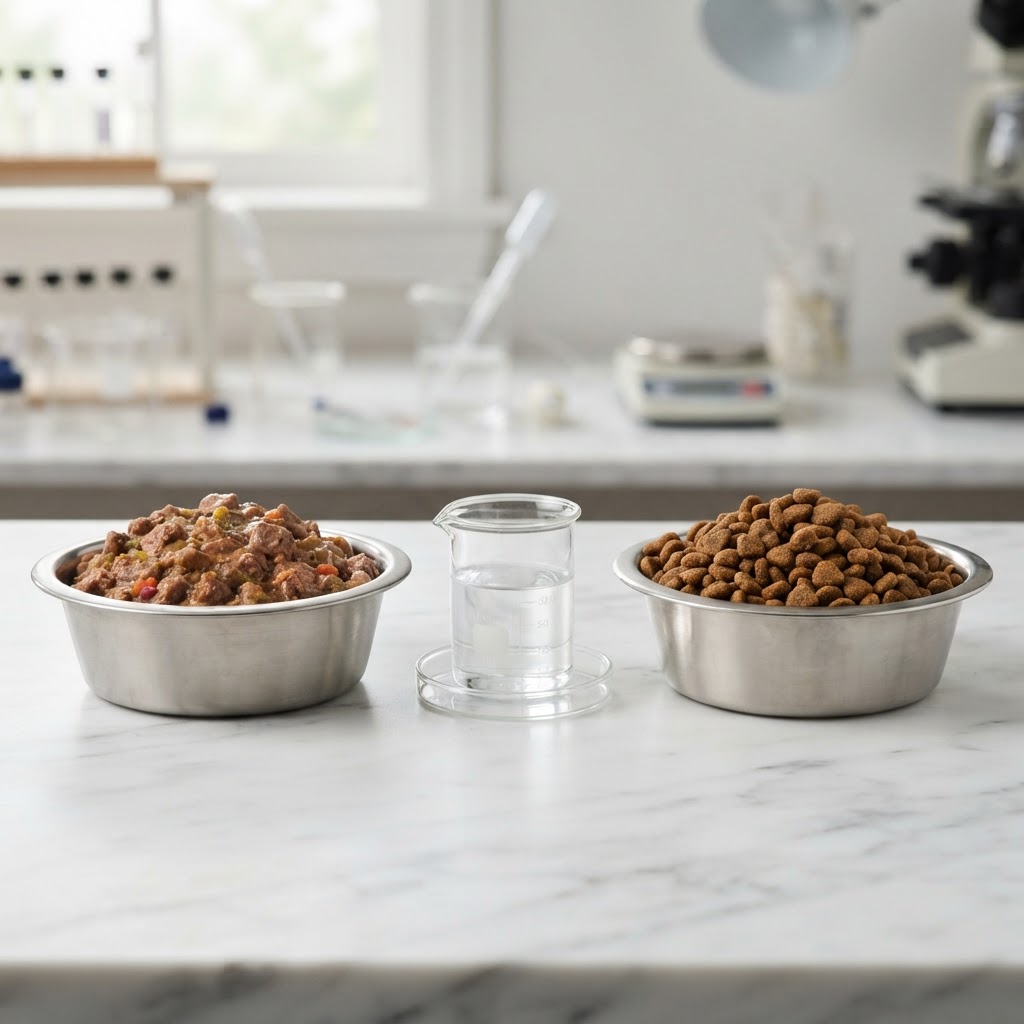
One of the most common mistakes pet owners make is comparing the guaranteed analysis of a wet food directly to a dry food. A canned food might show 8 percent protein on the label while a kibble shows 25 percent. It looks like the kibble has three times the protein, but that is completely wrong.
Why Moisture Skews Everything
Wet food is mostly water, often 75 to 85 percent. That water dilutes every other nutrient on the label. To make a fair comparison, you need to remove the water and look only at the dry matter, the actual nutritional content of the food.
The Dry Matter Formula
The Formula
Dry Matter = 100 percent minus Moisture percent. Then: Nutrient on DMB = (Nutrient as listed divided by Dry Matter) times 100.
Let us walk through a real example with a canned dog food that lists 8 percent protein and 78 percent moisture.
- 1Dry Matter = 100 - 78 = 22 percent.
- 2Protein on DMB = (8 / 22) x 100 = 36.4 percent.
- 3That 'low protein' canned food actually contains 36 percent protein on a dry matter basis, higher than most kibbles.
What Good Dry Matter Numbers Look Like
| Nutrient (DMB) | Good Range for Dogs | Good Range for Cats |
|---|---|---|
| Protein | 25-35% | 35-45% |
| Fat | 12-20% | 15-25% |
| Fiber | Below 5% | Below 5% |
| Ash | Below 7% (dry), Below 10% (wet) | Below 7% (dry), Below 10% (wet) |
Ash on DMB for Wet Food
For wet foods (moisture above 20 percent), ash content should only be flagged as elevated if it exceeds 15 percent on a dry matter basis. Wet foods naturally concentrate minerals when converted to DMB.
Why This Matters for Your Pet
Without dry matter conversion, you might reject an excellent wet food for appearing low in protein, or overfeed a dry food that looks richer than it actually is. Every BowlWise report automatically converts guaranteed analysis to dry matter basis so you can compare any two products fairly, regardless of moisture level.
Compare Fairly
Run a scan on any product and you will see the full dry matter breakdown, including whether it qualifies as wet food and what the true nutrient density is.
Your Quick Checklist
0/4 doneFound this helpful? Share it with other pet owners.
Top-Rated Product Reviews
Put this into practice - see how popular pet foods score on our independent analysis.